 State of the World
»Environmental Destruction
»Social & Economic Injustice
»Militarism & Conflicts
»Increasing Consumption
»Expanding Eco-Footprint
»Third World Debt Good News Concious Choices
»Actions To Take
 | 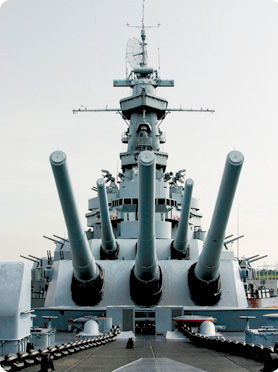
| MILITARISM & CONFLICTS The world still spends $1 trillion dollars on military, for making weapons and training people to kill, instead of using that money for creating a better and sustainable world for all. Enormous amount of skills, resources, life energies go to create better killing machines and weapons and support the military-industrial complex, instead of going towards the betterment of the society and the planet. The US spends approximately half of the $1 trillion dollars on defense (approx $450 billion). In addition, the US is going to spend an additional $200 billion or so for the war in Iraq. Imagine, if the same $200 billion, had been used for social, humanitarian activities - poverty reduction, food, housing, education, health - in Iraq and the Middle East, how it would impacted the world? As 2004 began, by one count, 24 significant ongoing armed conflicts (1,000 or more deaths) raged around the world, with another 38 hot spots that could slide into or revert to war. Armed conflicts have many costs, in addition to the cost in human lives that is reported in the news. The 1999 Report of the UN Secretary-General put the economic costs to the international community of seven major wars in the 1990s, not including Kosovo, at $199 billion. On top of that are the costs of economic losses to the countries actually at war. Other important areas affected by armed conflict are: Ecoterrorism: destruction of environment as a weapon A well-known example is the U.S. military's use of Agent Orange to destroy food sources and foliage during their war against Vietnam. A more recent example is the destruction of Kuwaiti oil wells by retreating Iraqi military forces during the 1991 Persian Gulf War, which released tons of gaseous pollutants such as carbon dioxide and sulfur dioxide into the atmosphere, causing black, greasy rains to fall in Saudi Arabia and Iran and black snow in Kashmir (over 1,500 miles away). Environmental destruction as collateral damage - The explosion of a heavy bomb creates temperatures of approximately 3,000 degrees Celsius. This not only annihilates all flora and fauna but also destroys the lower layers of soil, which can take anywhere from 1,500 to 7,400 years to regenerate
- Long after active conflict ends, land mines can continue to leave former conflict zones uninhabitable.
- Over 20,000 sites on more than 1,700 U.S. military facilities are contaminated with conventional toxic wastes
- Depleted uranium (DU) weapons are made from nuclear waste products. DU is extremely dense, sharpens upon impact, and self-ignites. So DU weapons are used to penetrate and detonate heavily armored combustible vehicles such as tanks. On impact DU produces a dust which is both chemically toxic and radioactive and can readily be carried in the wind. These airborne particles are small enough to be inhaled, causing birth deformities, cancer, degenerative diseases, paralysis, or death depending on the level of exposure. DU was first extensively used by US forces in the 1991 Persian Gulf War (the first break with the post-Hiroshima convention against use of nuclear arms), then again by NATO in 1994-95 in Bosnia and Herzegovina and 1999 in the Kosovo conflict. It is currently used by US forces in Afghanistan and Iraq. DU cannot be cleaned up and there is no known medical remedy. The environmental consequences of DU weapons residue will be felt for thousands of years as its decay products continually transform into even more hazardous radioactive substances. And, as one nuclear scientist wrote, "Radiation has no borders, respects no races or socio-economic classes...it's going to get all of us".
Social Casualties - As of May 2004, the number of countries facing serious food shortages throughout the world stood at 35. The causes are varied but civil strife predominates.
- Hunger used as a weapon: Food stocks, means of food production, or food producers themselves are seized or destroyed. Food relief is diverted from intended beneficiaries to the military and their supporter.
- Hunger as collateral damage: Conflict creates poverty, which results in hunger. Markets and livelihoods are disrupted, leaving households without sufficient resources to get food.
- Children: The proportion of war victims who are civilians has leapt in recent decades from 5 per cent to over 90 per cent and at least half of these are children. During 1986-96, around 2 million children were killed in armed conflict. Three times as many were seriously injured or permanently disabled. Assault rifles are cheap and widely available, thanks to the international arms trade. In Uganda, an AK-47 can be purchased for the cost of a chicken. In some countries, government or rebel armies have recruited (often forcibly) tens of thousands of children to use these lightweight weapons. Most are adolescent boys, but some recruits are 10 years or younger.
- Physical security: UNHCR estimates 9.7 million refugees last year. This was the first year since 1981 that the estimate was below 10 million.
Some Facts - World military expenditure estimated to be 1 trillion dollars in year 2003
- US will spend $400 billion on military, but only $52 billion on education and $49 billion on health
- US will spend 40% of the world total military expenditures.
- There are still 30,000 nuclear weapons in the world.
Resources & References | |