 State of the World
»Environmental Destruction
»Social & Economic Injustice
»Militarism & Conflicts
»Increasing Consumption
»Expanding Eco-Footprint
» Third World Debt Good News Concious Choices
»Actions To Take
 | 
| EXPANDING ECO-FOOTPRINT Ecological Footprint is a quantitative measure of how much ecologically productive land and water a defined population unit needs to support its current consumption and to take care of its wastes. Everything we use for our daily needs and activities comes from raw natural resources. The Ecological Footprint, measured in acres or hectares, calculates the amount of Earth's bio productive space needed to keep a certain population unit living and consuming at its current levels. The calculations takes into account the following resources: - Arable Land - amount of land required for growing crops for food, fiber, animal feed etc.
- Pasture Land - resources required for growing animals for meat, hides, milk etc.
- Forests - for fuel, furniture, housing etc, also providing many ecosystem service like climate stability, erosion prevention etc.
- Oceans - for fish and other marine products
- Infrastructure needs - transportation, factories, housing etc. based on the built up land used for these needs
- Energy costs - Land required for absorbing carbon dioxide emissions and other energy wastes.
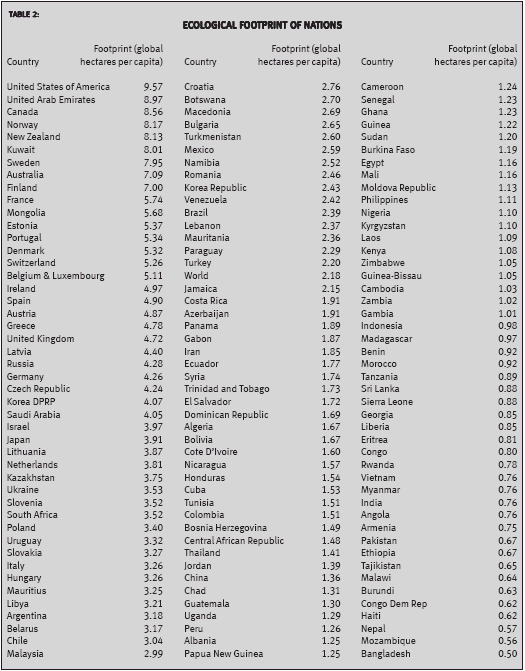
Species extinction, toxic pollution of the air, water, land etc. are not yet taken into account in calculating the ecological footprint. Ecological Footprint - Global & Nations The planet's biological productive capacity (biocapacity) is estimated at 1.9 hectares or 4.7 acres per person. Currently, we as humanity globally are using up 2.2 hectares per person, living beyond the planet's biocapacity to sustain us by 15%, or by a deficit of 1 acre per person. This deficit is showing up as failing natural ecosystems - forests, oceans, fisheries, coral reefs, rivers, soil, water, global warming etc. The planet's biocapacity is both affected by the global population and as well as the rate of consumption. Higher consumption depletes the planet's carrying and renewal and regeneration capacity. Estimates indicate that, if global population trends continue, the ecological footprint available to each person would be reduced to 1.5 hectares per person, by 2050 and if consumption rates as prevalent in the rich western countries are adopted by the majority of the humanity, then we would need 4 to 5 planets more to sustain ourselves. USA is the country with the largest per capita footprint in the world - a footprint of 9.57 hectares. If everyone on the planet was to live like an average American, we would need 5 planets, or our current planet's biocapacity could only support about 1.2 billion people. On the other hand, if everyone lived like an average person in Bangladesh, where the footprint is only 0.5 hectares, the earth could support roughly 22 billion people.
Following are the ecological footprints of some countries:
"Ecological Footprint analyses provide an important reminder of the implications of resource use at the global level and the differences between countries around the globe. The Ecological Footprint can also help tell important stories at the local, national, and international levels, providing support for policies that make cities and regions more sustainable."
- From the Ecological Footprint of Nations by Redefining Progress
| |